- Home
- Damp wall
Damp wall
A damp wall has a cause. Find it before you treat it.
Rising from the ground, coming in from outside, a leak, condensation, or soil against the wall: five causes, five different treatments. The wrong one costs the price of the right one, plus the right one.
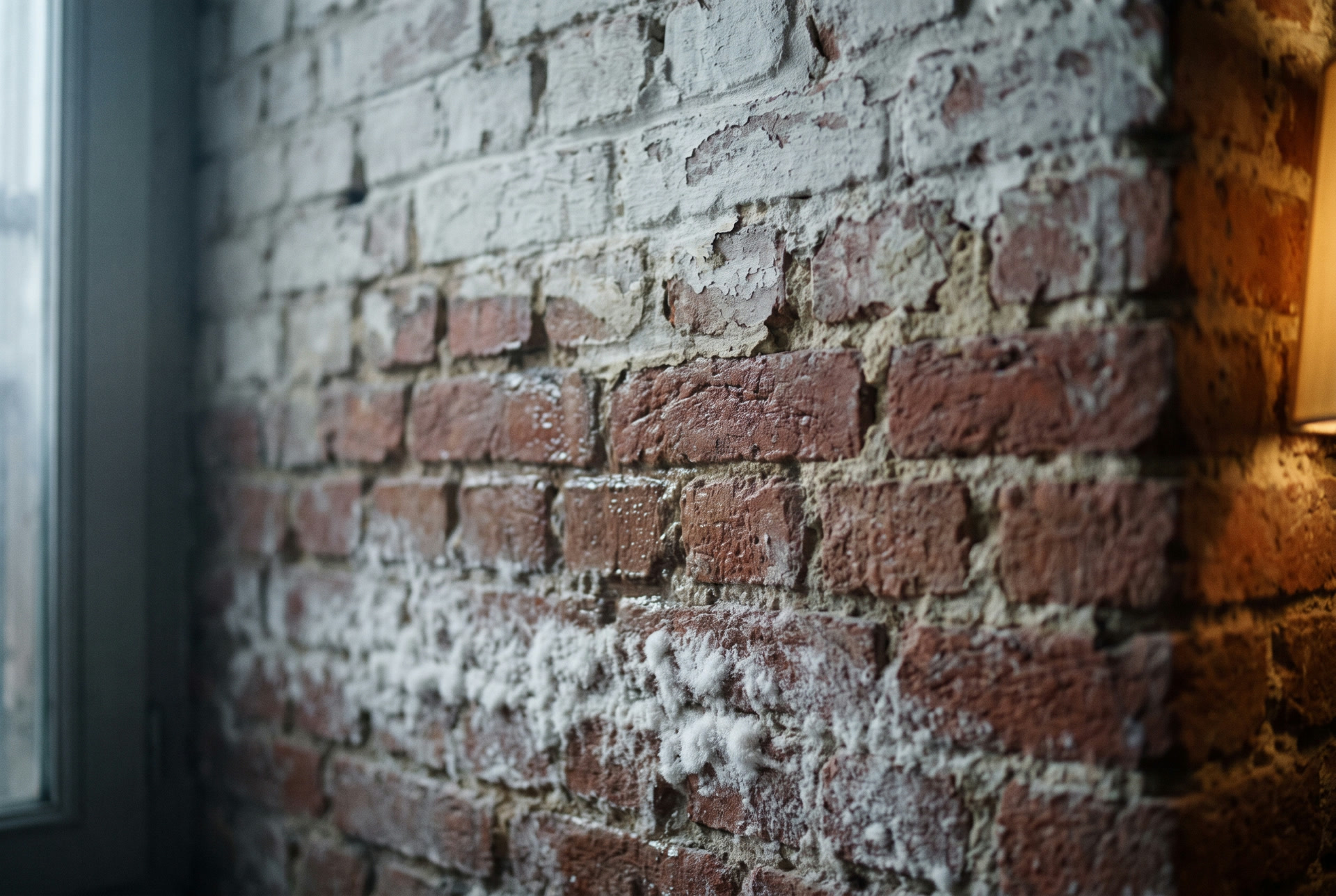
Reading the wall
Where the stain sits says almost everything. Low, even, along the length: rising damp. In a corner, up high, behind furniture: condensation. Under a window, around a sill, under a terrace: water coming in. Always the same spot, whatever the weather: a leak. On a wall whose other face touches soil: lateral damp.
The second clue is the calendar. A stain that grows after rain comes from outside. A stain that grows in winter, when windows stay shut, comes from the air in the house.
Why diagnosis comes first
On Belgian forums the stories of failed treatments all sound alike: an injection sold in one visit, on a wall that was actually suffering from a cracked gutter or a badly sealed terrace. The wall stayed damp, and the owner paid twice.
So we measure at several heights, look outside as much as inside, and write down what we found before pricing anything. If the cause is not our trade, a roofer, a plumber, we tell you.
What we do
Cut the cause: injection for rising damp, repointing, sill or waterproofing repair for water coming in, ventilation and cold-spot insulation for condensation, digging out and sealing for a wall against soil.
Restore the wall: strip the damaged plaster, desalt, renovation render or plastering, vapour-permeable paint. Renovation and painting are done by the same group.
Check: a reading a few weeks later, to be sure the wall is drying as planned.
What it costs
It depends on the cause. Repointing is priced per m², injection per metre of wall, ventilation per room. The visit for a quote is free in Brussels and Brabant wallon, and market ranges are on our prices page.
Questions
The questions we get.
How do you dry out a damp interior wall?
By cutting off the water first, otherwise it never dries. Then by removing salt-laden plaster and letting the air do its work: ventilation, steady heating, and no paint until the wall is dry.
Is an anti-damp product enough?
A waterproof paint or render applied inside blocks evaporation: the water stays in the wall and comes out higher up, or on the other side. Those products have a place as a finish, after the cause is treated, never instead of it.
How do you repair a wall that has taken damp?
Once the cause is treated and the wall is dry: strip the damaged plaster, desalt if salts have risen, new render, then vapour-permeable paint. Painting a wall that is still damp means painting again in six months.
Do you also do the painting afterwards?
Yes. Infiltration Bruxelles is the damp arm of Freitas Group, which does renovation and painting. One quote can run from the cause to the last coat.
Also
What often goes with it.
Your request
Describe what you see.
We come and measure within five working days, and the written quote follows within 48 hours. The visit is free and you are not committing to anything.
- Phone0467 88 59 52
- WhatsAppSend a photo
- Email[email protected]
- CompanyFreitas Group SRL
BCE 1041.906.890 - LanguagesEnglish, Français, Português
- HoursMon to Fri, 7am to 7pm
Sat, 9am to 1pm