- Home
- Dry rot
Dry rot
Dry rot lives on damp. We treat both.
It is the fungus people fear, with reason: it digests timber and crosses masonry to find more. But it cannot survive without water. Cutting off the damp is part of the treatment, not the follow-up.
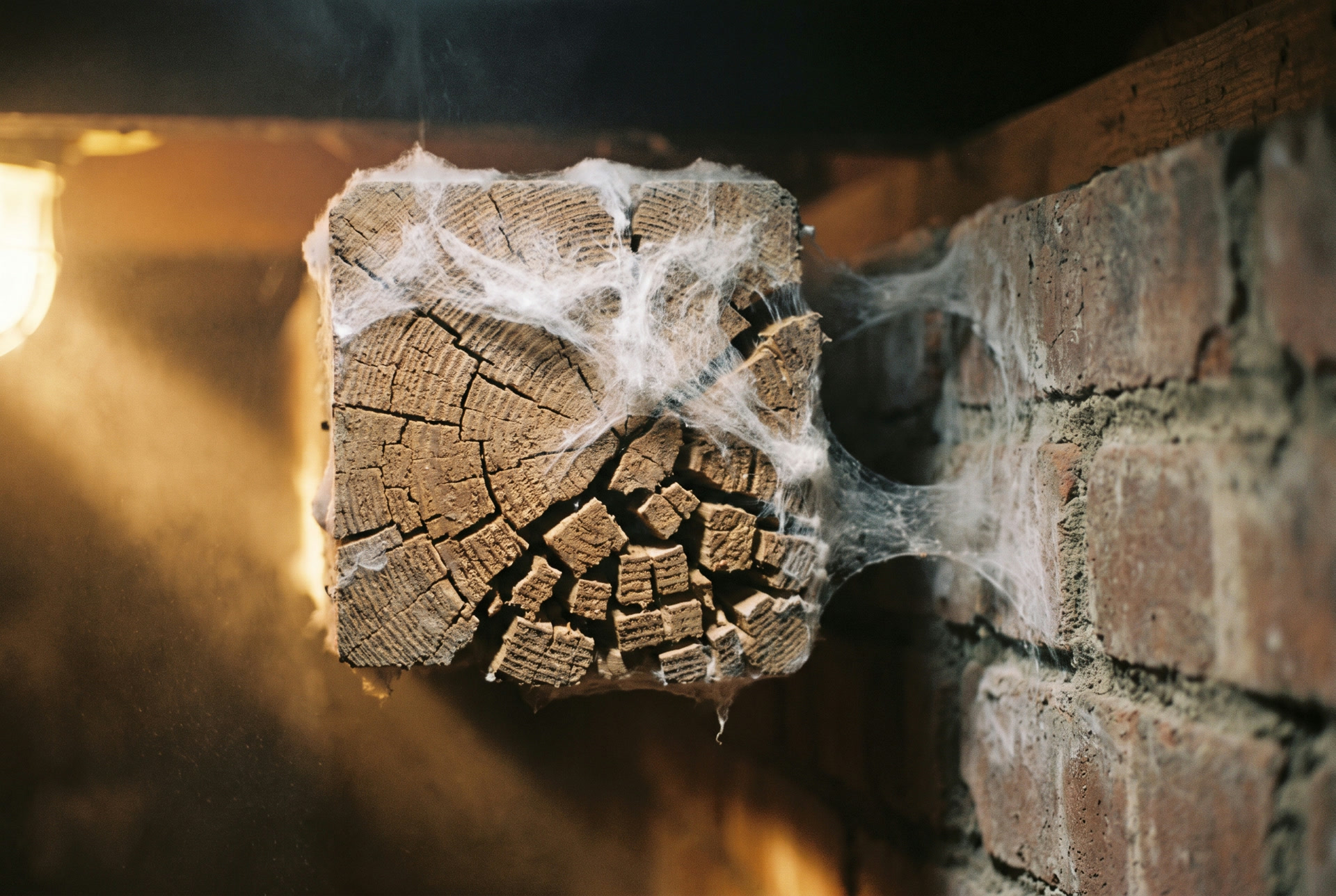
The first signs
Timber that cracks into small cubes and crumbles under a finger, in a cellar, under a floor, behind panelling. White or grey cotton-like strands on timber or brick. Sometimes a rust-brown pancake with a white edge, shedding rust-coloured dust. A persistent mushroom smell in a closed room.
It likes damp, dark, airless places: cellars, blocked underfloor voids, under bathtubs, timbers built into a damp wall.
What we do
We identify. Other fungi damage timber without being dry rot, and the treatment differs. In doubt, a sample goes to a laboratory.
We cut the water. Rising damp, ingress, a leak: the source of moisture feeding the fungus is treated first, or it comes back.
We remove and treat. Affected timbers are taken out with a margin beyond the visible traces. The masonry is treated with fungicide, at the surface and by injection depending on how deep it has gone.
We replace and ventilate. Treated timber, underfloor void reopened, air moving. Then a check a few months later.
What to know
Dry rot crosses masonry joints to reach timber further away, including at the neighbour's in a terraced house. It does not attack concrete or brick themselves; it uses them as a path.
It is not toxic to people. The danger is structural: a floor or a beam can lose its strength with nothing showing at the surface.
Questions
The questions we get.
What are the first signs of dry rot?
Timber cracking into cubes and crumbling, white cotton-like strands, a mushroom smell in a damp, dark place. Often discovered when lifting a floor or emptying a cellar.
Does dry rot attack concrete?
No. It feeds only on timber. But it crosses masonry, joints and render, to reach timber further on, which gives the impression it is attacking the wall.
Is it dangerous to people?
Not directly. The spores can irritate like any mould, but the real risk is structural: a floor that no longer carries.
How does it spread?
Through its strands, across walls and floors, and through its spores, present almost everywhere and germinating only on damp timber. That is why damp is the real subject.
Also
What often goes with it.
Your request
Describe what you see.
We come and measure within five working days, and the written quote follows within 48 hours. The visit is free and you are not committing to anything.

- Phone0467 88 59 52
- WhatsAppSend a photo
- Email[email protected]
- CompanyFreitas Group SRL
BCE 1041.906.890 - LanguagesEnglish, Français, Português
- HoursMon to Fri, 7am to 7pm
Sat, 9am to 1pm